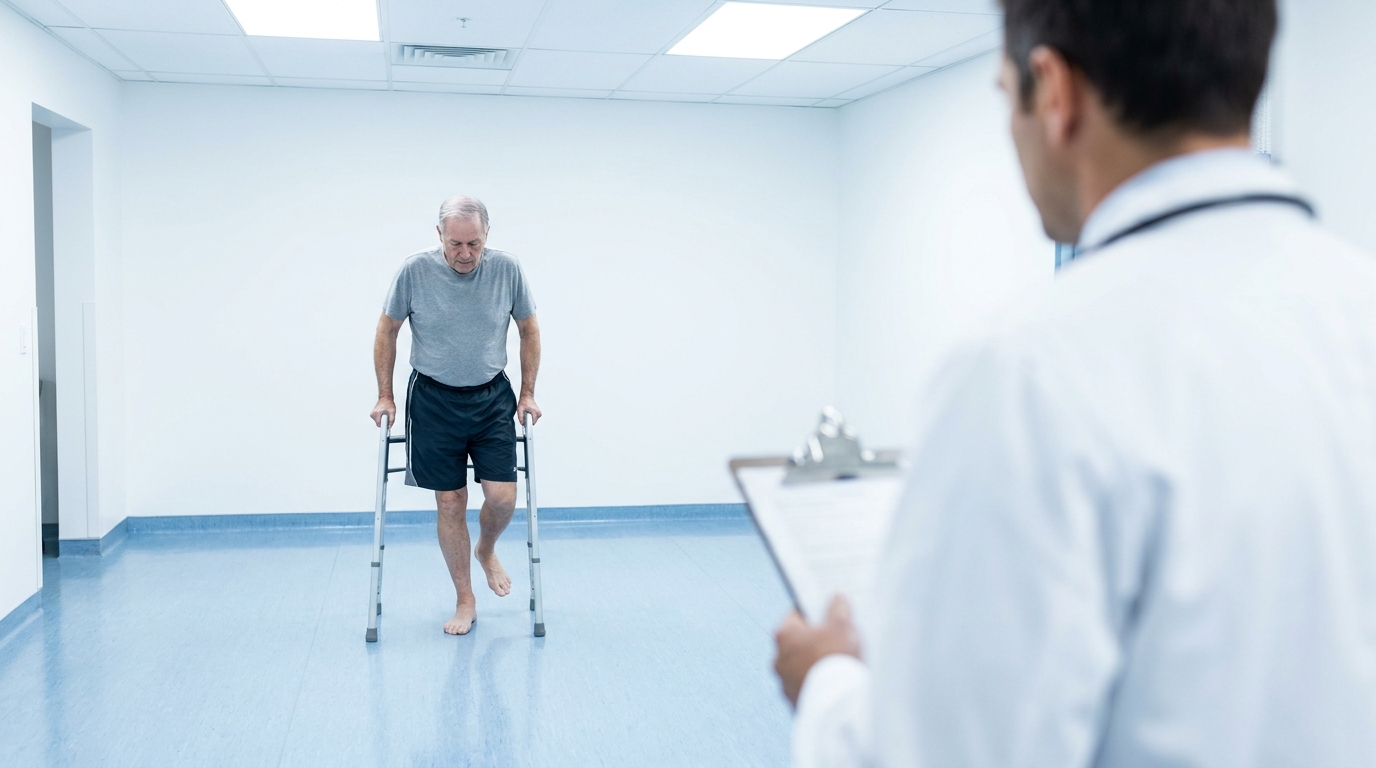
The Balancing Act: What Your One-Leg Stand Says About Your Longevity
Balance is one of those silent pillars of health that we rarely think about until it starts to waver. For many of us in our 60s, 70s, and beyond, the simple act of standing on one leg might seem like a playground game, but in the world of geriatric medicine, it is considered a vital sign of physical resilience. If you have ever wondered, "How long should I be able to stand on one leg?" you are asking a question that researchers are increasingly using to predict long-term health outcomes.
The Scientific Benchmark for Age 70
According to data often cited by the Mayo Clinic, balance is a complex integration of your vision, your inner ear (vestibular system), and your proprioception—the body’s ability to sense its position in space. As we age, these systems naturally experience a decline in precision.
A landmark study published in the British Journal of Sports Medicine—which has been widely discussed by researchers at institutions like the Harvard Medical School—suggests that the ability to stand on one leg for 10 seconds is a crucial marker for middle-aged and older adults. While the study focused on a 10-second threshold as a predictor of all-cause mortality, it serves as a powerful baseline for those aged 70. If you can maintain your balance for 10 seconds or more without grabbing onto a support, you are likely in a strong position regarding your neurological and physical health.
Why Balance Declines and Why It Matters
It is not just about avoiding a fall; it is about maintaining autonomy. The National Council on Aging (NCOA) reports that falls are the leading cause of injury-related death among older adults in the United States. When you lose the ability to balance on one leg, it often indicates a reduction in core strength, diminished ankle stability, or a slight lag in neuromuscular response times.
The good news? Balance is highly trainable. Unlike some aspects of aging that are fixed, the neuromuscular pathways involved in balance are remarkably plastic. By practicing consistently, you can retrain your brain to react more quickly to shifts in your center of gravity.
Practical Ways to Improve Your Stability Today
You don't need a gym membership to improve your balance. You can start right now in your own home with these simple, safe, and effective exercises.
1. The Kitchen Counter Hold
While you are waiting for your coffee to brew or the microwave to finish, hold onto the counter with one hand and lift one foot off the ground. Aim for 10 seconds. As you get more confident, try using just one finger for support, and eventually, move to hovering your hand just an inch above the surface so you can grab it if you need to.
2. The "Stork" Stance
Stand near a sturdy chair. Lift one leg and try to hold the position for 10 to 15 seconds. If this feels too easy, try doing it with your eyes closed—but only if you have a stable object within immediate reach! Closing your eyes forces your brain to rely on your inner ear and ankle proprioception rather than your vision.
3. Strengthening the Core
Balance starts at the center. Gentle core exercises, such as seated pelvic tilts or supported standing marches, help stabilize your torso. The Cleveland Clinic suggests that strengthening the glutes and hips is equally vital, as these muscles act as the "anchors" that keep you upright when you shift your weight.
Key Takeaways
- The 10-Second Goal: Aiming to hold a single-leg stand for 10 seconds is a standard benchmark for measuring stability and longevity.
- Safety First: Always practice near a sturdy surface like a kitchen counter or a heavy chair. Never practice balance exercises in a room with loose rugs or clutter.
- Neuroplasticity is Real: You can improve your balance at any age through consistent, daily practice.
- Consult Your Doctor: If you find you cannot hold your balance for more than 2-3 seconds, speak with your physician to rule out inner ear issues, medication side effects, or vision changes.
A Final Note on Consistency
Remember, the goal isn't to become a gymnast; the goal is to remain independent. By integrating these small, intentional movements into your daily routine, you are effectively "future-proofing" your body against the risks associated with falls. Start small, stay consistent, and celebrate the progress you make each week.
Ready to take the next step in your health journey? Explore our library of articles on Strength Training for Longevity and discover how to build the muscle mass necessary to support your balance for years to come.

Comments