The 3-Minute Morning Balance Test Every Senior Should Try
As we navigate our golden years, we often focus on heart health, nutrition, and cognitive sharpness. Yet, there is one silent metric of longevity that frequently goes overlooked until a fall occurs: our balance. Maintaining stability is not just about avoiding accidents; it is a vital indicator of neuromuscular health and overall independence.
At SeniorVitalityHub, we believe in proactive wellness. Today, we are introducing a simple, science-backed exercise you can incorporate into your morning routine: the Three-Minute Balance Assessment. This isn't a medical diagnosis, but rather a powerful tool to help you track your stability over time.
Why Balance Declines (And Why You Can Reverse It)
Balance is a complex interplay between your vision, your inner ear (vestibular system), and your proprioception—the body’s ability to sense its position in space. According to the National Institute on Aging (NIA), balance naturally begins to decline as we lose muscle mass and joint flexibility, but this process is not inevitable. Regular physical activity can effectively counteract these age-related changes, keeping your "internal gyroscope" finely tuned.
The 3-Minute Morning Balance Test
Before you start, ensure you are near a sturdy surface like a kitchen counter. Safety is our priority.
Phase 1: The Single-Leg Stand (60 Seconds)
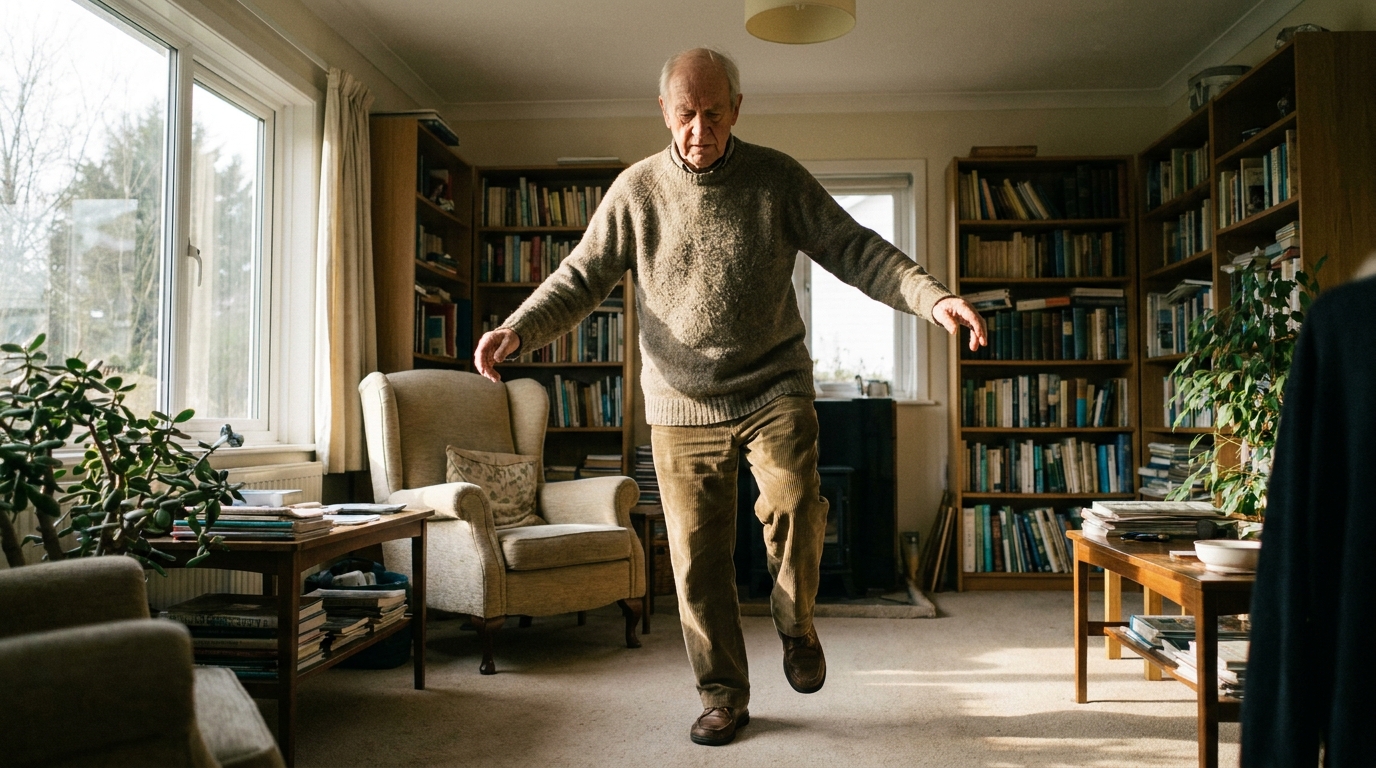
Stand comfortably with feet hip-width apart. Raise one foot slightly off the floor. Keep your gaze fixed on a point at eye level. Time yourself for 30 seconds, then switch legs for another 30 seconds. If you can hold this for the full minute without touching the counter, your static balance is excellent.
Phase 2: The Tandem Walk (60 Seconds)
Place one foot directly in front of the other, heel to toe, as if walking on a tightrope. Take 10 steps forward, then 10 steps backward. This challenges your dynamic balance and core stability. Harvard Medical School research suggests that practicing "tandem walking" is one of the most effective ways to improve neural pathways that prevent falls.
Phase 3: The Sit-to-Stand Challenge (60 Seconds)
Sit in a sturdy chair. Without using your hands for support, stand up fully and then sit back down. Repeat this for one minute. This assesses lower-body strength and vestibular control. A 2022 study published in JAMA Internal Medicine highlighted that the ability to perform sit-to-stand movements efficiently is a strong predictor of long-term mobility in adults over 65.
Key Takeaways
- Consistency is King: Performing these movements daily builds the "muscle memory" required to prevent accidental trips.
- Safety First: Always clear your area of throw rugs or cords. If you feel dizzy, stop immediately.
- Track Your Progress: Keep a simple notebook. If you find yourself needing the counter less over time, you are making real progress.
- Listen to Your Body: If you experience persistent lightheadedness, consult your primary care physician to rule out underlying issues.
Actionable Tips for Daily Stability
Beyond your morning test, consider integrating these habits into your day. The Cleveland Clinic suggests that simple lifestyle adjustments, such as wearing supportive footwear even inside the home and ensuring your living spaces are well-lit, can reduce fall risks by up to 30%. Furthermore, incorporating Tai Chi or gentle yoga can significantly improve your proprioception, making you more aware of your body's movement in changing environments.
Remember, balance is a skill, not just a physical trait. By dedicating just three minutes each morning, you are investing in your future freedom and confidence. Your body is capable of incredible adaptation, regardless of your starting point.
Ready to build even more strength and stability? Explore our full library of Balance & Fall Prevention articles to discover expert-guided exercises tailored for your vitality journey.




Comments