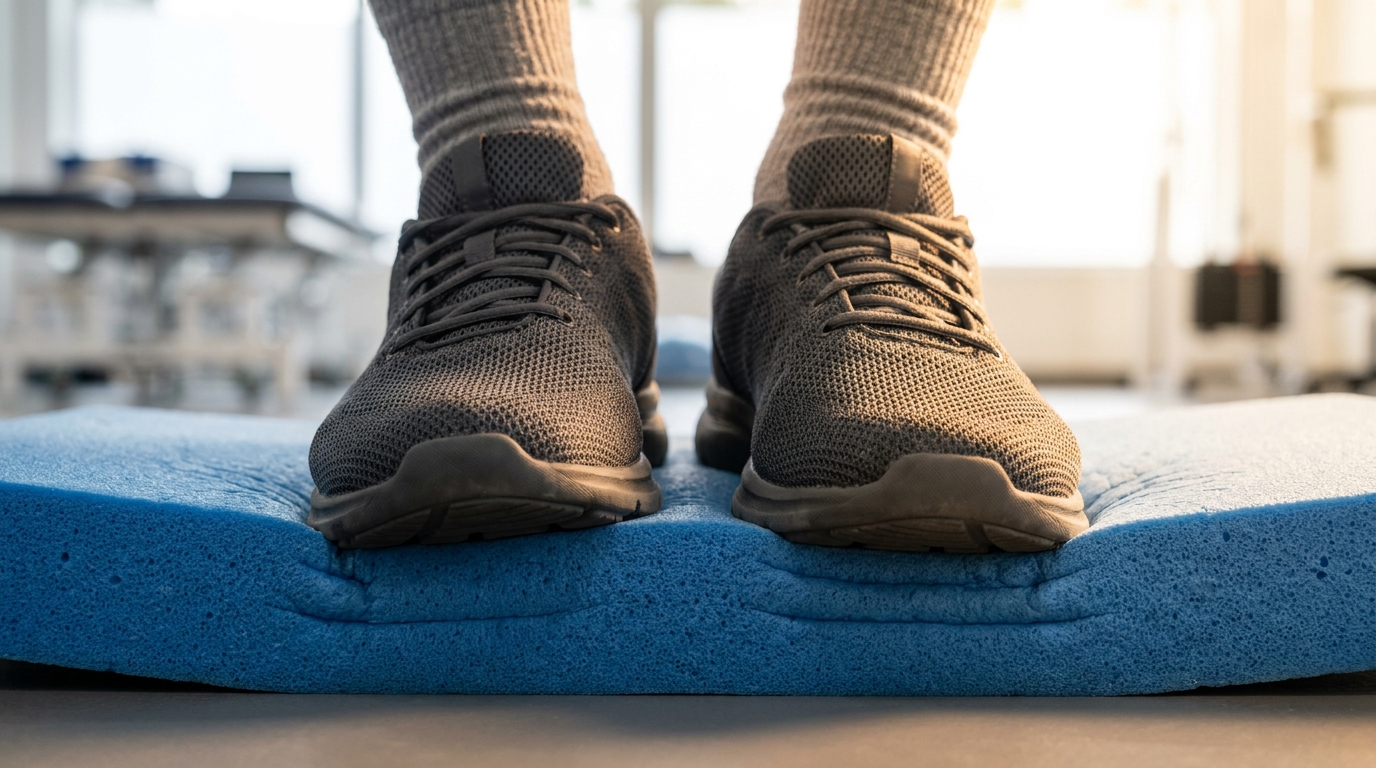
Understanding Neuropathy and Your Balance
For many of us navigating our golden years, peripheral neuropathy—often manifesting as numbness, tingling, or pain in the feet—can feel like a major roadblock to staying active. When the nerves in your feet are damaged, they struggle to send clear signals to your brain about where your body is in space, a concept known as proprioception. This loss of feedback can make walking on uneven surfaces feel precarious.
However, the good news is that your brain is remarkably adaptable. By incorporating specific balance exercises into your routine, you can train your visual and vestibular systems to compensate for the reduced sensory input from your feet. According to the Mayo Clinic, regular physical activity and targeted balance training are among the most effective ways to maintain independence and prevent falls for those living with nerve-related sensory loss.
Key Takeaways
- Neuropathy disrupts proprioception, making balance training essential for fall prevention.
- Visual cues and core strengthening can help compensate for reduced sensation in your feet.
- Always perform these exercises near a sturdy chair or countertop for safety.
- Consistency matters more than intensity; aim for 10–15 minutes of daily practice.
- Consult your physician before starting any new exercise regimen to ensure it aligns with your specific health needs.
Top Balance Exercises to Try Today
Before beginning, ensure you are wearing supportive, well-fitting footwear. Always have a stable surface nearby, such as a heavy dining chair or a kitchen island, to grab if you feel unsteady.
1. The Single-Leg Stance
This is the gold standard for stability. Stand behind a sturdy chair, holding onto the backrest. Lift one foot slightly off the ground and try to hold the position for 10 to 30 seconds. Harvard Medical School research shows that improving single-leg balance is strongly correlated with increased gait stability and reduced fall risk in older adults. If you feel confident, try hovering your hands just an inch above the chair rather than gripping it.
2. Heel-to-Toe Walk (Tandem Gait)
This exercise challenges your center of gravity. Place your heel directly in front of your toes, as if walking on a tightrope. Focus your eyes on a stationary object at eye level—this helps your brain rely on visual input rather than foot sensation. Perform this near a wall so you can touch it for support if your balance wavers.
3. The Weight Shift
Stand with feet hip-width apart. Slowly shift your weight to your right leg, lifting your left foot slightly, then shift back to the center and repeat on the left side. This helps you practice controlling your center of mass, a critical skill for navigating daily activities like getting out of a car or stepping over a threshold.
The Science of Sensory Compensation
A 2022 study published in JAMA Internal Medicine highlighted that multimodal exercise programs—those combining strength, balance, and flexibility—are significantly more effective at reducing fall rates than walking alone. When you have neuropathy, your body must learn to prioritize information from your inner ear (the vestibular system) and your eyes. By performing these movements, you are effectively "re-programming" your nervous system to be more attentive to these alternative signals.
Practical Safety Tips for Home
Managing neuropathy is as much about your environment as it is about your body. Consider these small, actionable changes:
- Clear the Paths: Remove area rugs or loose cords that can easily snag your feet.
- Improve Lighting: Since you are relying more on your vision, ensure your hallways and stairwells are well-lit, especially at night.
- Footwear Matters: Avoid walking barefoot at home. Choose shoes with non-slip soles and adequate arch support to provide a stable base.
According to the National Council on Aging (NCOA), most falls among seniors are preventable through a combination of home modifications and regular exercise. If you find these exercises challenging at first, remember that progress is rarely a straight line. Celebrate the small victories, like standing for a few seconds longer than you did last week.
Take the Next Step Toward Vitality
Living with neuropathy doesn't mean you have to limit your movement. By dedicating just a few minutes each day to these balance-focused exercises, you are investing in your long-term mobility and confidence. Remember to listen to your body; if you feel pain, stop and rest. Your journey to a steadier, more active life begins with the very next step you take.
Ready to build more strength and stability? Explore our full library of Senior Fitness Guides to find low-impact routines designed specifically for your needs.


Comments