Why Your Hips Are the Foundation of Your Independence
As we navigate our sixties and beyond, we often focus on cardiovascular health or brain sharpness. Yet, one of the most critical components of longevity is often overlooked: hip strength. Your hips are the command center for your balance, stability, and mobility. When the muscles surrounding the hip joint—specifically the gluteus medius, gluteus maximus, and hip flexors—begin to weaken, our gait changes, and our risk of falls increases significantly.
According to the National Council on Aging (NCOA), falls are the leading cause of injury-related deaths among adults aged 65 and older. By strengthening the hips, you aren't just building muscle; you are building a safety net that protects your independence and confidence in daily movement.
The Science of Stability
Research consistently highlights the link between lower-body strength and fall prevention. A study published in the Journal of the American Geriatrics Society demonstrated that structured resistance training targeting the hips and legs significantly reduces the incidence of falls in community-dwelling seniors. When your hips are strong, they provide the necessary force to stabilize your pelvis during every step, helping you recover quickly if you trip or lose your footing.
Furthermore, Harvard Medical School notes that hip-strengthening exercises help improve bone density in the upper femur, which is critical for preventing fractures if a fall does occur. Strengthening the muscles around the bone acts as a shock absorber, protecting the skeletal structure during impact.
4 Essential Exercises You Can Start Today
You don't need a gym membership to start building hip vitality. These movements can be performed in the comfort of your living room. Always consult with your physician before beginning a new exercise regimen.
1. Standing Hip Abduction
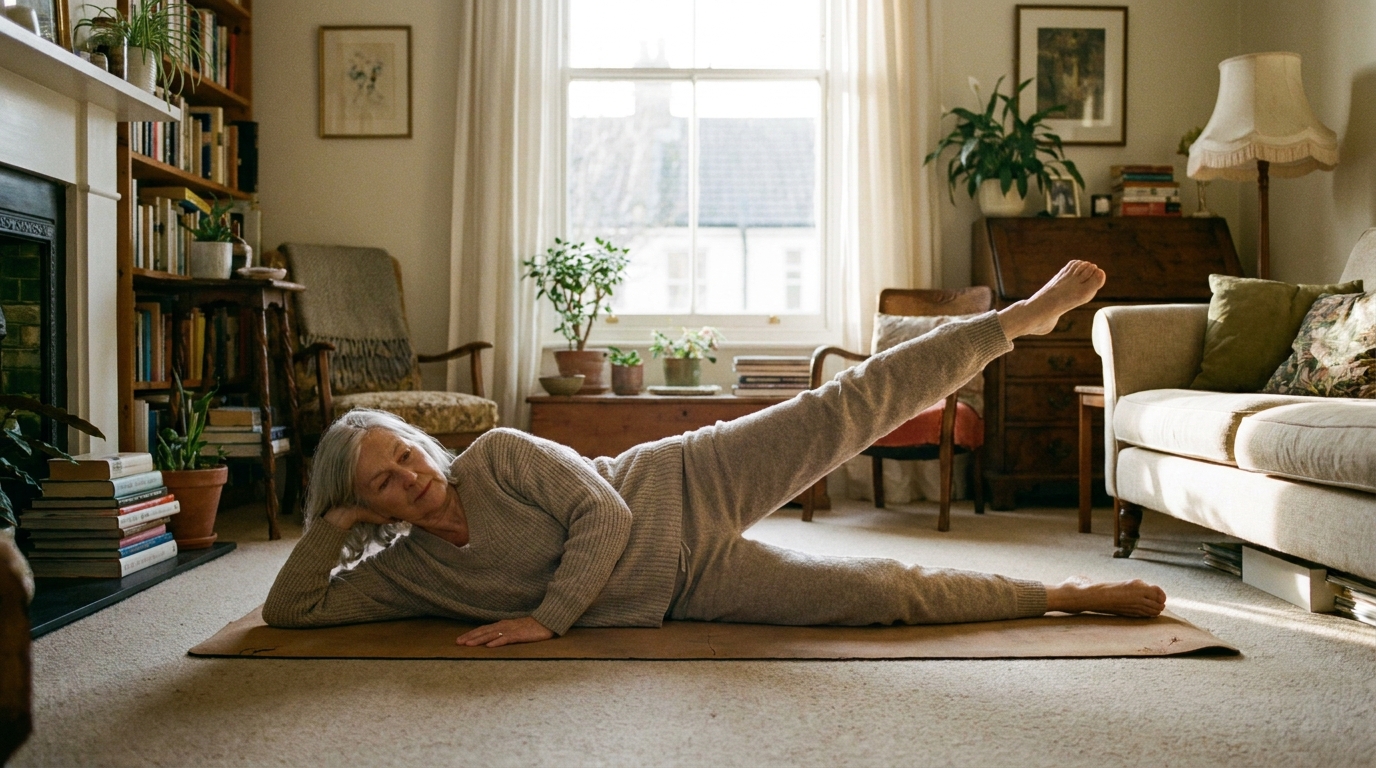
Stand behind a sturdy chair, holding the back for balance. Keep your back straight and slowly lift your right leg out to the side, keeping your toes pointed forward. Hold for two seconds, then lower slowly. Perform 10 repetitions on each side. This exercise targets the gluteus medius, a key muscle for side-to-side stability.
2. Glute Bridges
Lie on your back with your knees bent and feet flat on the floor, hip-width apart. Pressing through your heels, lift your hips toward the ceiling until your body forms a straight line from shoulders to knees. Squeeze your glutes at the top and lower slowly. This movement builds the posterior chain, which is essential for walking and climbing stairs.
3. Seated Leg Extensions
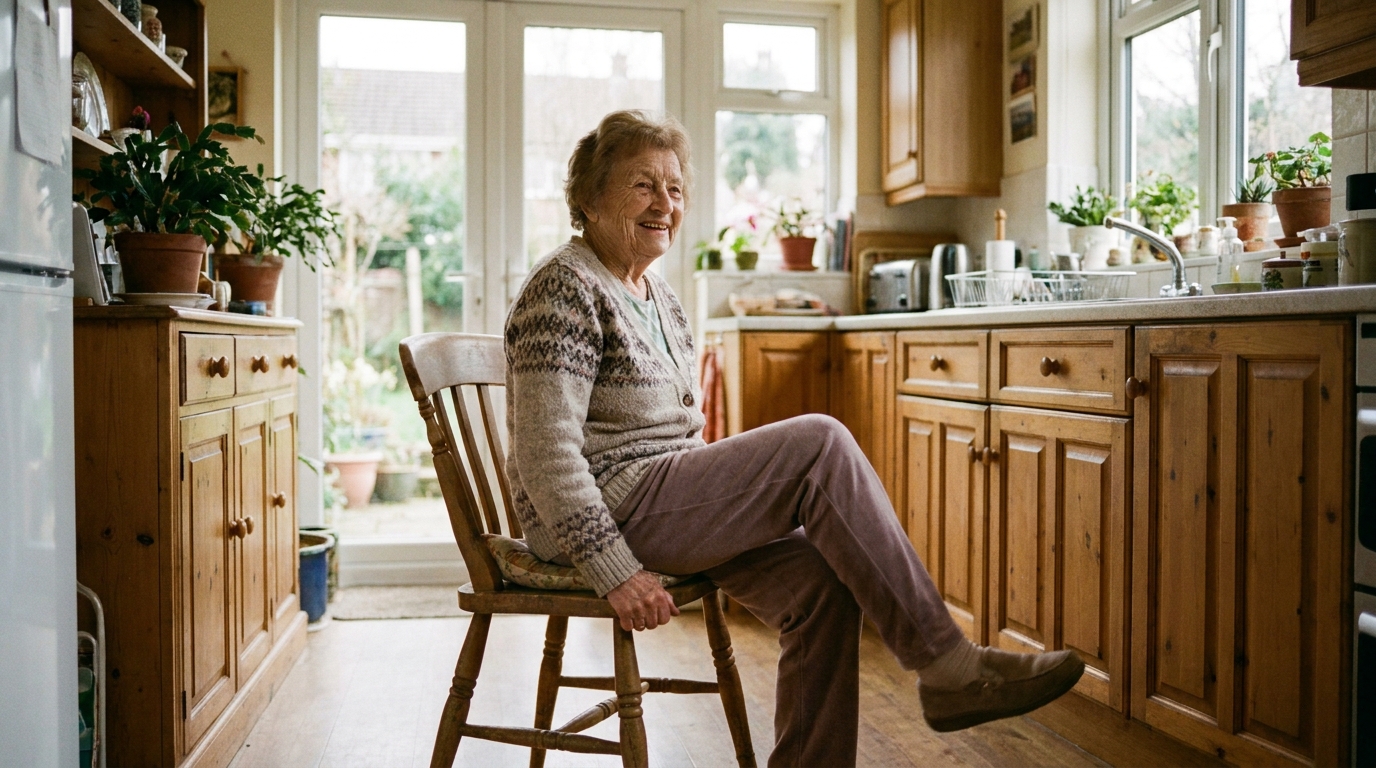
Sit tall in a sturdy chair. Extend one leg out straight in front of you, squeezing the thigh muscle. Hold for three seconds, then lower. This helps strengthen the muscles surrounding the hip and knee, providing greater support for your entire lower body.
4. Sit-to-Stands
Start by sitting on the edge of a chair. With your feet flat, engage your core and push through your heels to stand up without using your hands if possible. Slowly lower yourself back down with control. This mimics the movement of getting out of a car or off a sofa and is one of the most functional exercises for seniors.
Safety First: Tips for Success
Consistency is more important than intensity. The Mayo Clinic suggests that seniors should aim for at least two days a week of strength training targeting all major muscle groups. Keep these tips in mind:
- Listen to your body: Mild muscle fatigue is normal, but sharp pain is a signal to stop.
- Breathe: Never hold your breath during exertion; exhale on the effort.
- Hydration: Stay hydrated before, during, and after your movements to support muscle recovery.
- Use support: Never hesitate to use a wall or chair for balance until you feel completely confident in your form.
Key Takeaways
- Hips are vital: Strong hip muscles are the primary defense against falls and hip fractures.
- Functionality matters: Focus on movements that mimic daily tasks like standing up and walking.
- Consistency wins: Just two sessions per week can lead to measurable improvements in balance and strength.
- Consult your doctor: Always get professional clearance before starting a new exercise program.
- Use the environment: Use sturdy household furniture to maintain safety while performing exercises.
Building strength is a lifelong journey, and it is never too late to start. By dedicating just fifteen minutes a few times a week to these hip exercises, you are making a proactive investment in your future mobility and freedom.
Ready to take the next step in your health journey? Explore our library of Strength & Legs articles to discover more routines designed to keep you active and resilient.

Comments